We pulled into the car park at half nine on a bright Saturday, kids already unbuckled, and found a barrier with a laminated sign: car park full. No toilets either, just a bin and a steep path down to the sand. The beach itself was gorgeous. It was also useless for the day we had planned. That morning reset how I judge the best beaches for a family day out. Scenery comes last now. Parking, loos and the tide table come first.
So this is a checklist, not a beauty parade. I have scored a handful of beach types against the things that actually decide whether a family day works: can you park within a reasonable walk, are there toilets, is the sand or shingle kind to bare feet, does the tide leave you room to spread out, is there shelter when the wind picks up, and can you get food or at least a decent ice cream without a twenty-minute drive. If a beach fails two or three of those, it does not matter how good it looks in photos.
The Family Day Checklist: What Actually Matters
Start with access. A beach that needs a half-mile walk down a cliff path is a different proposition with a four-year-old and a cool bag than it is with two adults and a towel. Check whether parking is a proper car park with a pay machine, a council-run overflow field, or a strip of roadside that fills by ten in summer. Arriving before ten is the single biggest favour you can do yourself.
Toilets are next, and I will not apologise for leading with them. A beach with a clean, open toilet block and a tap for rinsing sandy hands is worth more than a cove with a better view. Check opening times too, because some blocks shut at five even in August. Baby changing facilities matter if you have a little one, and a bench or two near the entrance helps when you are juggling bags.
Then the water and the sand. Shelving matters. A beach that drops away quickly is fine for strong swimmers and nerve-wracking for parents of paddlers. Gentle, shallow entry with a stretch of wet sand is the gold standard. Check the tide range before you go, because a beach that is enormous at low water can be a narrow strip at high tide, and one that looks small at low tide can vanish entirely by mid-afternoon.
Finally, the practical extras. Lifeguards in season, a café or kiosk within walking distance, some shelter from the wind, and a bit of shade. Add a slipway or level path if you are pushing a buggy or a wheelchair. That is the checklist. Now here is how the main beach types score against it.
Sandy Resort Beaches: The Reliable All-Rounder
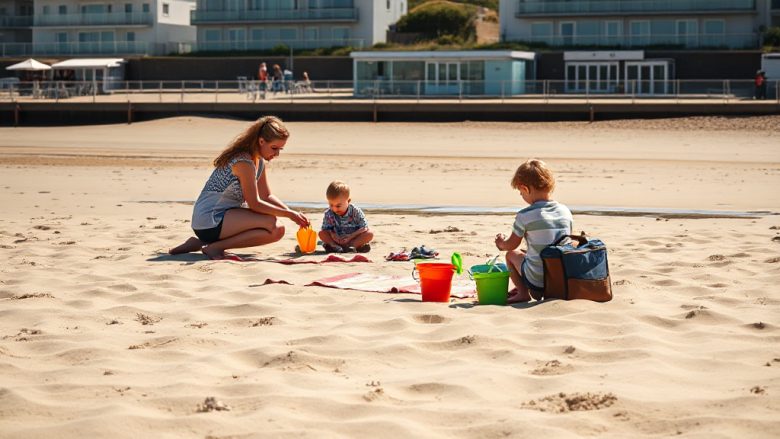
The classic resort beach is the one most families picture, and for good reason. Long stretches of sand, a promenade behind it, toilets and cafés within a couple of minutes of the water, and usually a proper car park or several. Lifeguards tend to be on duty through the summer, and there is often a shop selling buckets, spades and the inevitable inflatable that will not fit in the boot on the way home.
The trade-off is crowds. In peak season these beaches fill early, and the best spots near the water go first. Parking charges can add up over a full day, and the sea can still be cold enough to shorten a swim to five minutes. But you can plan around all of that. Arrive by half nine, park properly, and you have a base for the whole day with everything within a short walk.
Watch for one thing: a resort beach with a steep shingle bank or a sudden drop at the water’s edge. Some are gentle, some are not, and it varies from one end of the same beach to the other. Walk the first fifty metres before you settle.
Verdict: The safest bet for a full family day. Scores top marks on parking, toilets and food, and rarely surprises you.
Quiet Village and Harbour Beaches: Charm With Caveats
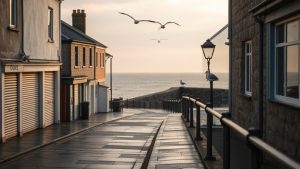
These are the beaches attached to a small village or harbour, often with a pub, a slipway and a handful of parking spaces. They are lovely, and they are the ones people recommend when they say a place is unspoilt. That word is doing a lot of work. Unspoilt often means one toilet block that may or may not be open, a car park with thirty spaces, and no shop for a mile.
If you are organised, these can be brilliant. Bring everything you need, arrive early, and check the toilet situation before you commit. Harbour beaches often have calm, sheltered water, which is a real plus for young swimmers, and the walls and buildings give you somewhere to retreat when the wind turns. The sand is sometimes mixed with pebbles or mud, so water shoes earn their place in the bag.
The bigger risk is the tide. Harbour and estuary beaches can empty out to a vast expanse of mud at low water, which is interesting for about ten minutes and then just wet. Check the tide table and aim for the middle hours rather than the extremes.
Verdict: Charming and often quieter, but only worth it if you have checked parking and toilets in advance. Fail that check and the day sours fast.
Shingle and Pebble Beaches: Better Than Their Reputation
I used to write off shingle beaches. Then I spent a day on one with a five-year-old and a picnic and changed my mind. The pebbles are uncomfortable to sit on without a mat, and bare feet take a beating on the walk to the water, but shingle beaches tend to be cleaner, less crowded, and the water is often clearer because there is less sand stirred up. They also drain fast, so you are not sitting on damp ground after a shower.
The practical kit is simple: a decent groundsheet or picnic blanket, water shoes or old trainers for the water’s edge, and something to lean against. Pebbles make poor sunbathing, so bring low chairs if you have them. Swimming is usually a short, brisk affair, and getting in and out over stones takes a bit of care with small children.
Parking and facilities vary enormously. Some shingle beaches have a proper car park and a café at the top of the slope; others have nothing but a lay-by. The slope down to the water can be steep, which is worth knowing if you are carrying a toddler and a cool bag at the same time.
Verdict: A good choice for a shorter, quieter day if you pack for the surface. Not the place for a full day of sandcastles.
Tidal and Estuary Beaches: Great With a Tide Table
Tidal beaches are the ones that change shape through the day, sometimes dramatically. At low water you might have a mile of flat sand and shallow pools; at high water there may be almost nothing left. For families with young children these can be wonderful, because the shallow pools warm up faster than the sea and give you a safe place to paddle without waves. Crabbing off a harbour wall or a little jetty is a classic way to fill an afternoon.
The catch is that you have to work with the tide rather than against it. Plan your day around low water if you want space, or around mid-tide if you want a bit of water to swim in. Never let children wander far out on a falling tide without watching the channel, because the water comes back faster than it looks and can cut off a sandbank. Ask locally if you are unsure, and keep an eye on the incoming edge.
Facilities are hit and miss. Some estuary spots have excellent visitor centres, toilets and cafés; others are little more than a car park and a path. Check before you go, and pack more food and water than you think you need, because the nearest shop can be a long way off.
Verdict: Excellent for a low-tide adventure with young children, provided you plan around the tide table and watch the channels.
A Quick Planning Note Before You Go
None of this is complicated, but it does need five minutes the night before. Check the tide times for the day you are going, not the day you are reading this. Look up whether the car park takes card or cash, because some rural machines still want coins. Confirm the toilet block is open, especially outside the school holidays. Pack water shoes, a groundsheet, sun cream and a windbreak, and take more water than feels necessary. Set off early. Half nine arrival beats eleven o’clock arrival every single time.
Do that, and you will spend the day on the sand instead of circling a car park or driving to find a loo. The best beaches for a family day out are not the prettiest ones. They are the ones that let you relax, and that almost always comes down to the boring details you sorted out before you left the house.